

World Cup 2026 Round of 32 Predictions: How AI Reads the Knockout Bracket
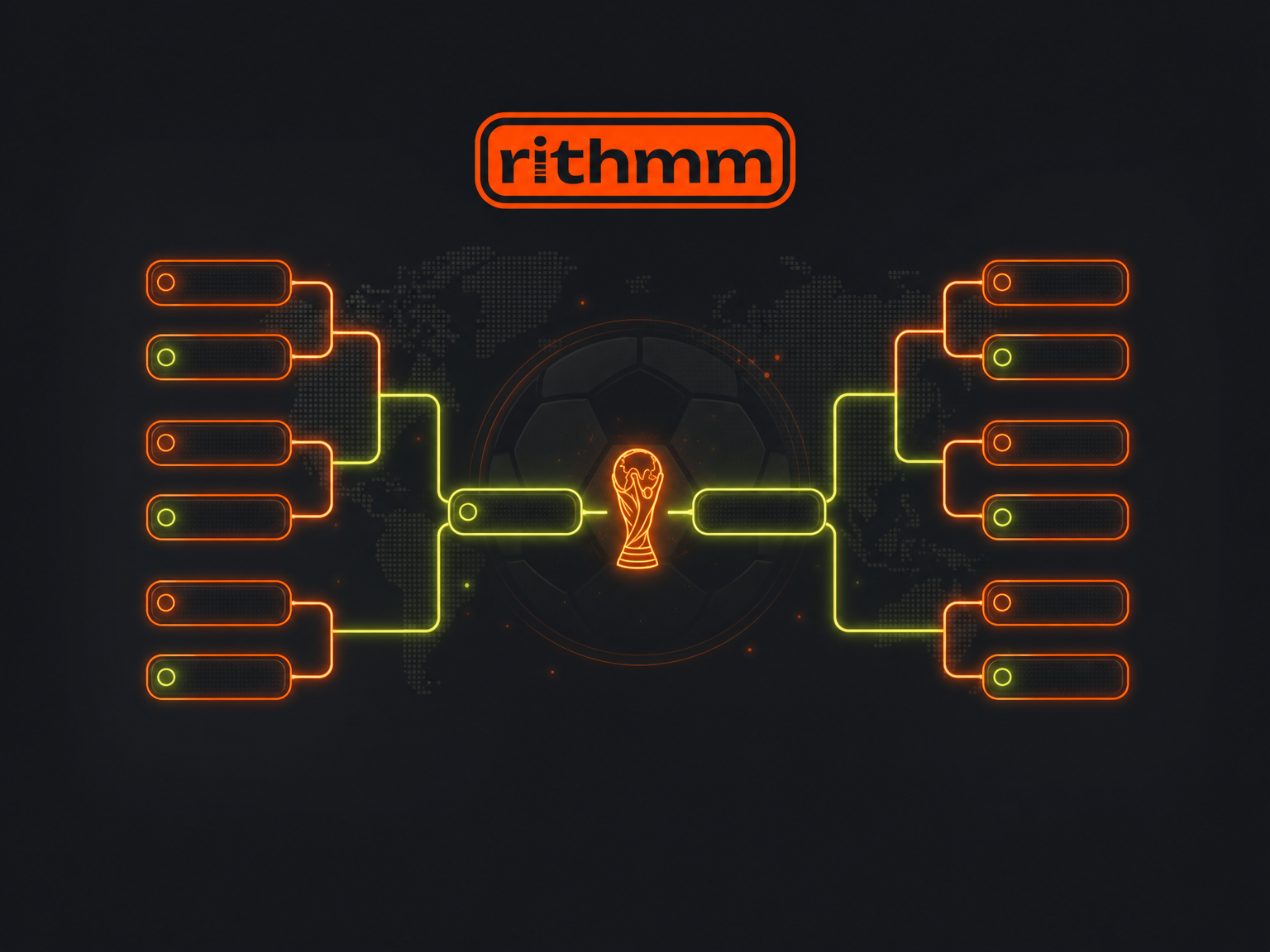
The group stage is almost in the books, and the 2026 World Cup is about to enter territory no tournament has ever seen. For the first time, the knockout phase opens with a Round of 32, a direct result of the expansion to 48 teams. The first knockout match kicks off June 28, the round runs through July 3, and the whole thing builds toward the final on July 19 at MetLife Stadium in New Jersey.
That structure changes how you should think about predictions. A 48-team field with eight best third-place teams sliding into the bracket creates matchups that did not exist in any previous World Cup, and it rewards anyone willing to look past the headline favorites. Here is how the knockout picture is shaping up, and how a data model reads it differently than a gut take.
The favorites are already shifting
The top of the board looked very different two weeks ago. France entered as a co-favorite alongside Spain and now sits alone at the front after a clean start, while Spain slid down the board following a stunning scoreless draw against tournament debutant Cape Verde. England has climbed into the conversation near the top, and Argentina, Portugal, Brazil, and Germany round out the group of teams with a realistic title path.
The lesson here is not which team is favored on any given morning. It is that the number moved, and it moved because new information arrived. A single result reordered the entire futures market. That is exactly the behavior a good model is built to capture, and it is the reason a prediction that was correct on June 11 can look wrong by June 22 without anything being broken.
The USA story is real, and the data backs the surge
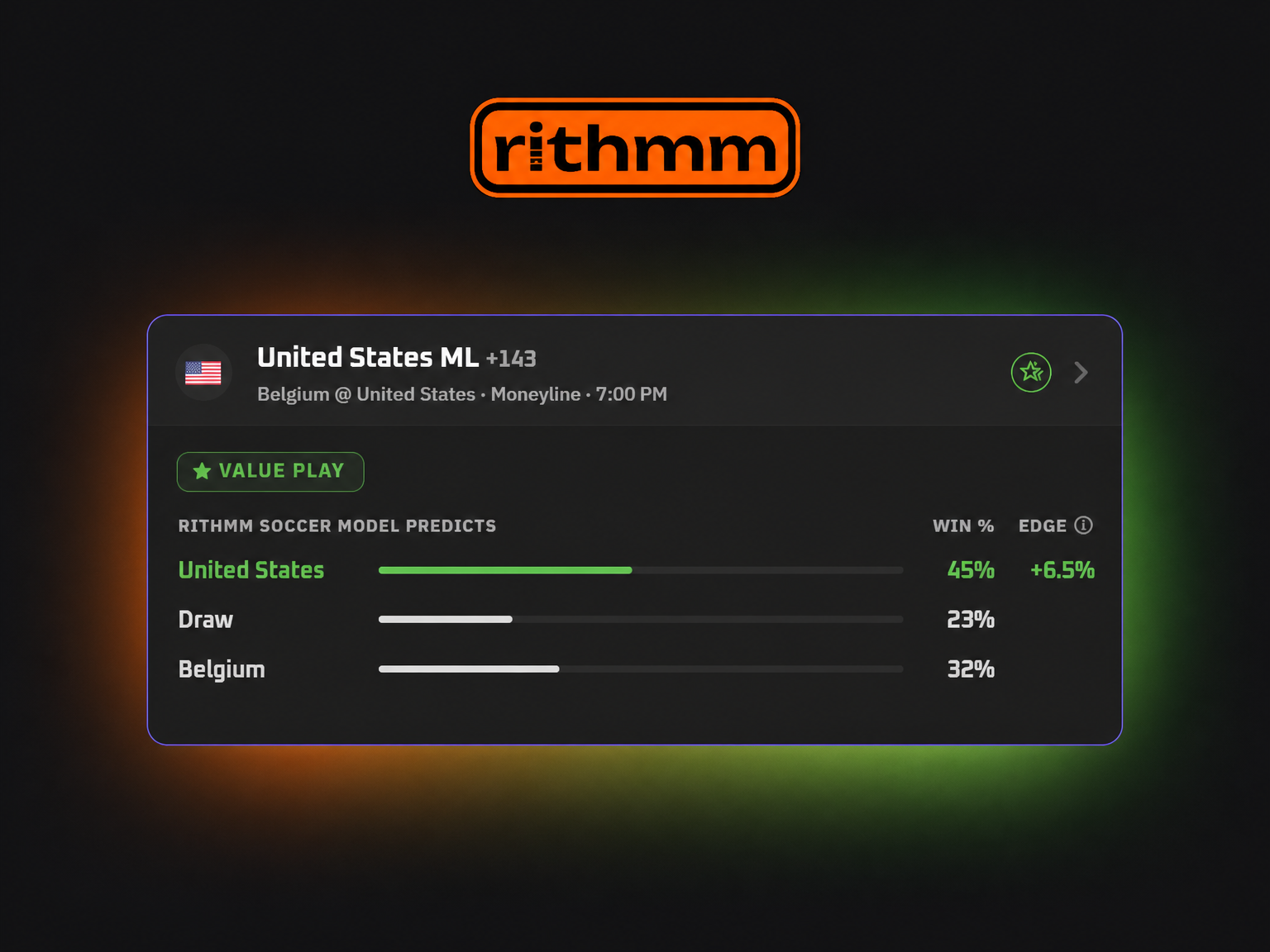
The co-hosts have given the home crowd something to believe in. After a commanding win over Paraguay and a shutout of Australia, the United States advanced to the knockout round and watched its title odds shorten meaningfully from where they opened in December. Mexico was the first nation to clinch a knockout spot, and Germany, after a rough recent World Cup history, looks resurgent.
None of this means the USA is winning the World Cup. The models still treat a deep American run as a long shot. What changed is the probability, and the size of that change is the part worth paying attention to. A team can be both a long shot and a strong value depending on how far the price has moved relative to the performance behind it. Separating those two ideas is most of the work.
Why the Round of 32 rewards a model
The new format is a gift to anyone who studies the bracket carefully. Twenty-four teams advance automatically as group winners and runners-up, and then eight more arrive as the best third-place finishers, which means the specific Round of 32 matchups are not locked until the final group results land. Paths to the final are uneven by design. One side of the draw can open up while the other turns into a gauntlet, and the teams that benefit are not always the ones casual viewers are tracking.
There is also a rules wrinkle that matters more than it sounds. For the first time at a World Cup, head-to-head results, not goal difference, serve as the primary tiebreaker for teams level on points. That single change can flip who finishes second versus third in a group, which in turn reshapes the entire knockout bracket. A model that simulates the remaining schedule thousands of times, accounting for tiebreakers and path difficulty, sees these branches before they happen. A human skimming the standings usually does not.
What a recomputing model actually does
The leading public forecasting models share one trait. They do not set a prediction and walk away. They re-run the tournament after every match, often simulating the rest of the bracket a hundred thousand times, and they give teams credit or blame for how they actually played rather than how they were supposed to play. The output is a probability that breathes with the tournament.
This is the part that trips people up. When a prediction changes the day after a result, that is not the model failing. That is the model working. New data came in, the math updated, and the number followed. A forecast that never moved through a tournament this volatile would be the thing to distrust. The goal is not to be right once. It is to be calibrated across hundreds of decisions, so that the teams a model rates at seventy percent actually win close to seventy percent of the time.
How to read the knockout stage like an analyst
Start with the path, not the team. Before you form an opinion on who wins a Round of 32 match, look at who waits in the Round of 16 and the quarterfinal beyond it. A favorite with a brutal draw and an underdog with an open lane can be priced very differently than their reputations suggest.
Then separate the question of who is likely to win from the question of where the value sits. Those are not the same. The best team and the best decision rarely point at the same name, because the price already accounts for the reputation. The value lives in the gap between what the market believes and what the performance data supports, and that gap is widest in a format this new, with matchups this unfamiliar.
Finally, expect the picture to move, and treat that as a feature. The bracket is not set in stone until the last group games finish. Lines will shift as lineups, injuries, and results land. A confident model leans into that motion instead of pretending the tournament is more predictable than it is.
Make smarter calls with Rithmm
Rithmm builds AI models that recompute as the tournament moves, turning the full knockout picture into a clear confidence read instead of a guess. The platform is a data and decisions tool, designed to help you understand the bracket and make sharper calls with the numbers in front of you. Coverage spans NFL, NBA, WNBA, MLB, PGA Golf, the World Cup, College Football, and NCAA Men's Basketball, so the same model-driven approach follows you from this summer straight into football season.
The Round of 32 starts June 28. The bracket is still forming, the favorites are still moving, and the teams with the cleanest paths have not all been crowned yet. That is the best moment to start reading the tournament with data on your side.