

What Is the Round of 32 at the 2026 World Cup?
What Is the Round of 32 at the 2026 World Cup?
If you've been watching the World Cup and suddenly heard people talking about a "Round of 32" and had no idea what that meant, you're not alone. This round has never existed at a World Cup before. FIFA expanded the tournament to 48 teams this year, which means the entire knockout format is different from anything fans have seen before.
Here's the simple version: the group stage is over, and now 32 teams are left. They play single-elimination games — win and you move on, lose and you go home. This is the Round of 32.
Why Is There a Round of 32 This Year?
In every previous World Cup, the knockout stage started with a Round of 16. That was the first do-or-die game. There were 32 teams in those tournaments total, and 16 made it through the group stage.
This year everything scaled up. FIFA expanded the field from 32 to 48 teams and reorganized the groups from 8 groups of 4 to 12 groups of 4. More teams, more groups, more games. And because 32 teams advance out of the group stage now instead of 16, the knockout bracket needed a new opening round: the Round of 32.
So if you watched previous World Cups and felt like something was "extra" this year, you're right. There is an entire additional knockout round that didn't exist before.
How Did 32 Teams Qualify?
The math is straightforward. There are 12 groups in this World Cup. The top two finishers from each group automatically advance. That's 24 teams. To get to 32, FIFA takes the 8 best third-place finishers from across all 12 groups and adds them to the bracket.
So 24 group winners and runners-up, plus 8 of the 12 third-place teams equals 32 teams in the knockout stage.
The 8 third-place spots go to the teams that performed best in third place across every group. FIFA ranks all 12 third-place finishers by points, then goal difference, then goals scored, and the top 8 advance. It's a competitive fight even for teams that didn't top their group.
What About Third-Place Teams?
This is where it gets a little confusing for casual fans. Finishing third in your group doesn't automatically eliminate you. Four of the 12 third-place teams will be going home, but eight of them will be in the Round of 32 playing against group winners.
That's actually a big shift from old World Cups. In the previous 32-team format, finishing third in your group meant you were out. Now there's still a lifeline, as long as you outperform the other third-place teams across the tournament.
Countries like South Africa made it through to the Round of 32 this way. They didn't win their group (Mexico did), but they accumulated enough points and goal difference to be one of the 8 best third-place finishers. That kind of result matters when you're building a pick around a team's tournament trajectory.
How Does a Round of 32 Game Actually Work?
Each match is 90 minutes of regular time. If the score is tied after 90 minutes, the game goes to extra time, which is two additional 15-minute halves. If the game is still tied after those 30 extra minutes, it goes to a penalty shootout to decide the winner.
There are no second chances. There's no aggregate score over two legs like in club competition. It's one game, one result, and if you lose you're on a plane home.
That single-elimination pressure is what makes knockout soccer so different from the group stage, where a team could absorb a loss and still advance. In the Round of 32, every minute counts.
What Happens After the Round of 32?
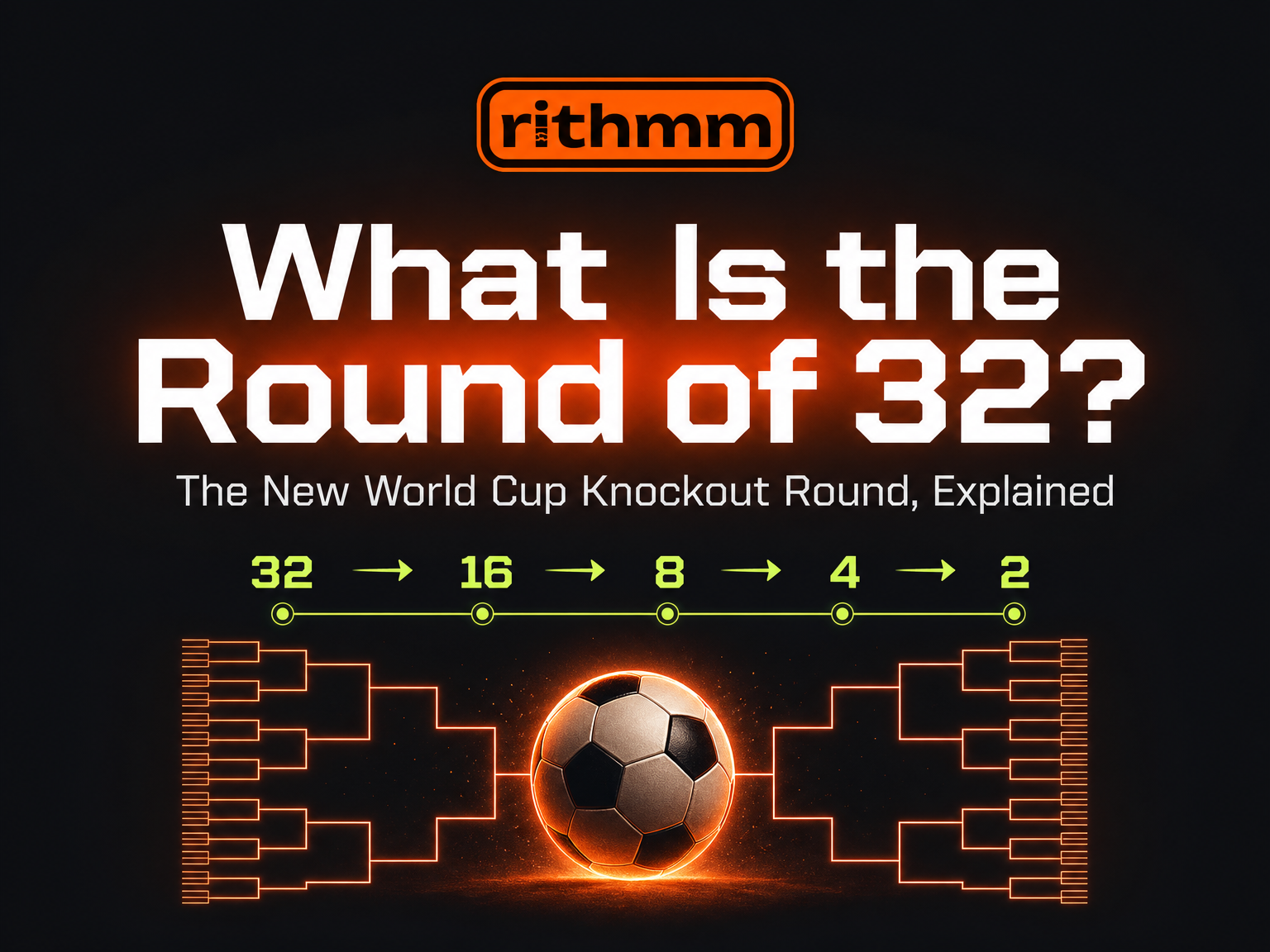
Once the 32 teams are cut to 16, the tournament moves into the Round of 16. Then the quarterfinals (8 teams), then the semifinals (4 teams), then the final. A team that wins in the Round of 32 still has to win four more games to lift the trophy.
The full road is Round of 32, then Round of 16, then Quarterfinals, then Semifinals, then the Final. For context, in a traditional 32-team World Cup the path was only three games to the final after group play. Now it's four. Teams that go deep will play 7 total games to win the whole tournament.
When Does the Round of 32 Start?
The Round of 32 kicks off on June 28, 2026, and runs through early July. With 32 matches to play before the Round of 16 begins, the schedule is packed. Multiple games happen on the same day across different venues throughout the United States, Canada, and Mexico. The final is scheduled for July 19, 2026.
Why This Makes Betting More Interesting
Single-elimination soccer produces some of the most unpredictable results in sports. A group-stage giant killer can now win three or four knockout games before anyone catches up to their momentum. A tournament favorite that scraped through as a third-place team can now reset and peak at the right moment.
The models track how teams perform in elimination formats, how they respond coming off a tough group stage, and how heavily favored sides hold up when the pressure is maximum. These are exactly the kinds of matchups where the data surfaces things the market consistently underweights.
When you see a line that doesn't quite match what the data shows, that's where the value lives. The Round of 32 is 32 such matchups. Rithmm's models are tracking all of them.
Want to see what the models are flagging for the knockout rounds? Download the Rithmm app and check today's picks.