

2026 World Cup Predictions: What the Models Are Saying
TLDR
Spain (+450) and France (+475) are the co-favorites heading into the 2026 World Cup, and the data backs both of them. England (+700) is the best value in the second tier. Portugal (+850) is the most interesting contrarian play with a path to the final and a once-in-a-generation narrative behind it. The 2026 format, now expanded to 48 teams across 12 groups, creates more variance than any World Cup in history, which means more value in the futures market for bettors paying attention.
Why 2026 Is the Hardest World Cup to Predict in History
This World Cup is unlike any that came before it. For the first time, 48 nations are competing across 12 groups of four teams each. The top two teams from every group advance, along with the eight best third-place finishers, for a total of 32 teams advancing to a bracket-style round of 32. That is 40 more matches than the 2022 edition and introduces a level of variance that no historical model has encountered before.
The 90-minute rule adds another layer of complexity. Unlike the NFL or NBA, soccer bets are typically graded on 90 minutes of regulation play only. Extra time and penalty shootouts do not count unless a sportsbook specifies otherwise. That changes how you approach every match, especially in the knockout rounds where elimination games regularly go to shootouts.
More teams, more matches, and a completely new format combine to make 2026 both the most exciting tournament to watch and the most challenging to predict. That is not a reason to stay out. It is a reason to go in with better data than the crowd.
The Co-Favorites: Spain and France
Spain and France have been trading the top spot on sportsbook boards for months, and heading into June they sit at essentially equal odds. Spain is currently at +450 and France at +475, with both teams drawing massive public action that continues to compress their lines.
Spain's case is straightforward. Lamine Yamal, still just 18, has emerged as the most dangerous winger in international soccer. Their midfield depth is unrivaled in Europe and their ability to control possession for full 90-minute stretches makes them difficult to beat in a knockout format. The concern is Yamal's fitness, which sportsbooks are clearly monitoring, and Spain's historical tendency to underperform relative to their talent level on the biggest stages.
France's case is built on individual talent depth. Kylian Mbappe is the best player in the world when fully fit, and a supporting cast drawn from Europe's top clubs makes Les Bleus dangerous in any scenario. Their question is chemistry. France has always been a team that underperforms in early group-stage play, then finds their gear in the knockout rounds. If that pattern holds in 2026, they are the scariest team in the bracket once it matters most.
The Value Tier: England, Portugal, Argentina, Brazil
England at +700 is drawing significant attention as the best value in the second tier. The Three Lions have the squad, the manager, and the tournament experience to go deep. Their group draw is manageable and their path to a potential semifinal does not require facing Spain or France until very late. For a team with England's talent level, +700 offers real value compared to where their odds stood a year ago.
Portugal at +850 is the most interesting play in the field. Cristiano Ronaldo is expected to play in what is universally understood to be his final World Cup, and few motivating factors in sports history have proven more powerful than a once-in-a-generation player chasing one last trophy. Portugal's squad is legitimately talented without relying on Ronaldo to carry them, which means the emotional narrative has real structural backing.
Argentina at +900 and Brazil at +900 are both legitimate contenders but the value at those odds is weaker than it looks on paper given their projected tournament paths. Both face potential collisions with European powers earlier in the bracket than ideal.
Dark Horses the Models Are Watching
Germany at 14-1 is the most credible dark horse in the field. A rebuilt squad with a clear tactical identity and favorable early group-stage positioning makes them a genuine threat to reach the final. If Spain or France stumbles in the group stage, which the expanded 48-team format makes more likely than ever, Germany is positioned to capitalize.
Norway at 35-1 deserves serious attention. Erling Haaland is the most dangerous striker at this tournament, and Norway's group draw gives them a realistic path to the round of 16. Deep tournament runs are built on goalscorers. At 35-1, Norway is the kind of play that does not need to win the World Cup to deliver a significant return. An unexpected semifinal appearance at those odds pays generously.
What the Models Are Seeing in the Group Stage
The group stage is where predictive models have historically outperformed casual betting lines the most. Public money floods into big-name teams and inflates their prices, while less-followed nations get undervalued in head-to-head group matches. The expanded 48-team format amplifies this effect. With 12 groups and four teams each, there are more low-information matchups than at any previous World Cup, and that is exactly where data-driven analysis identifies the most value.
Early group-stage lines favor familiar brand names over current form. A team with well-known stars that has been underperforming in qualifying may still open as a significant favorite simply because the public recognizes their names. Models that weight recent form, injury data, travel distance, and tactical matchups more heavily than name recognition tend to surface value in these spots consistently.
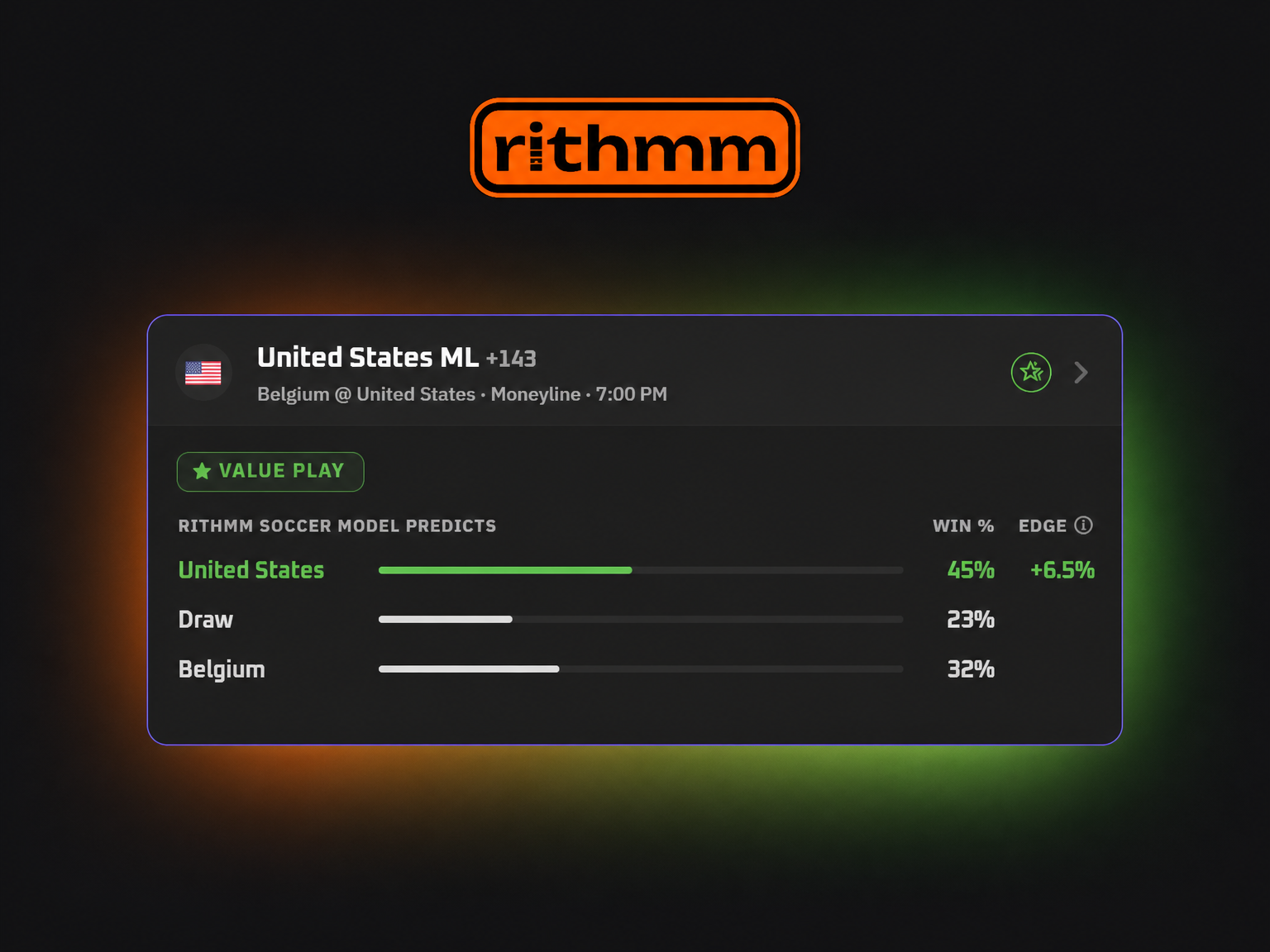
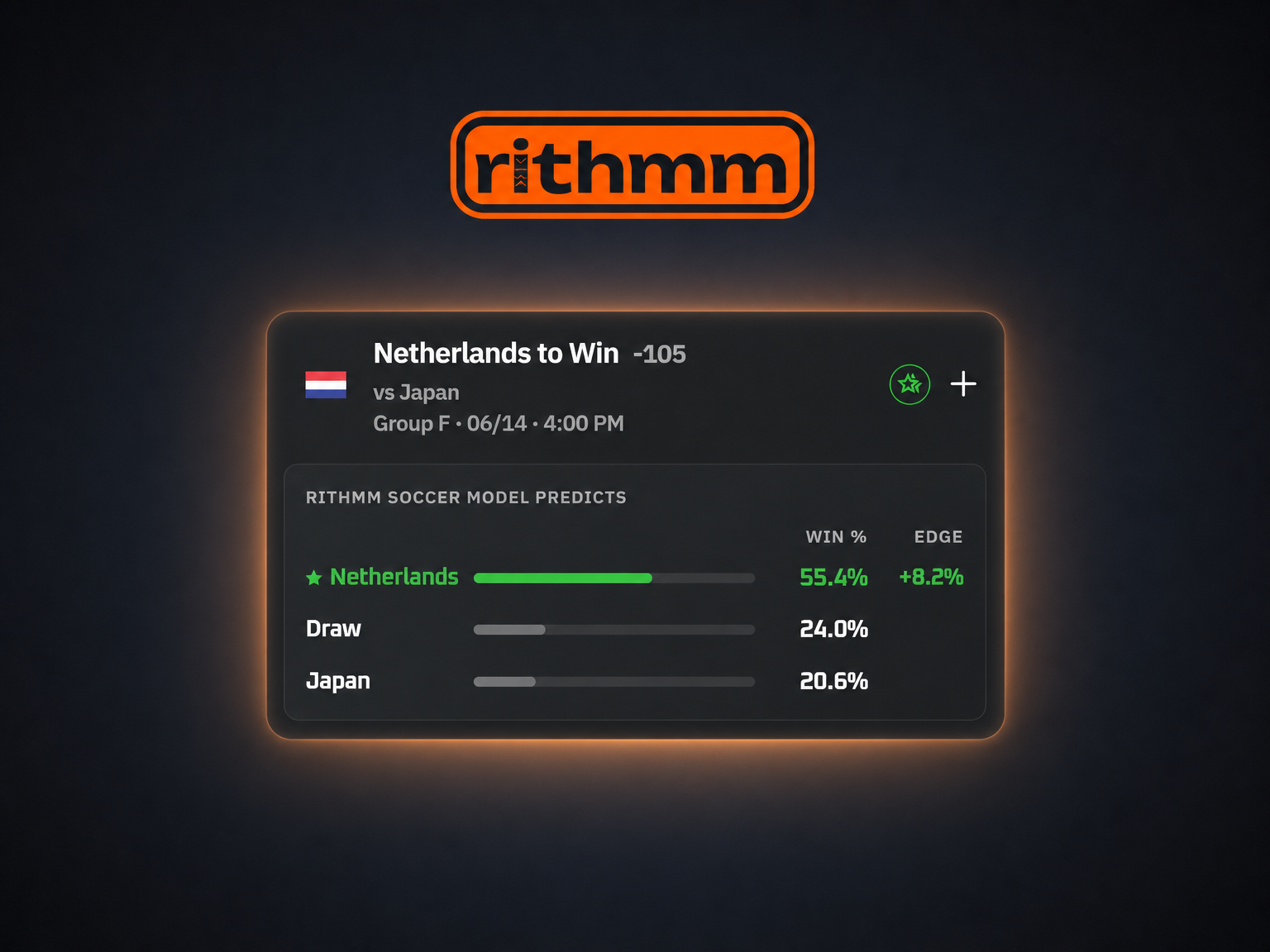
If you want to see what the models are flagging for specific World Cup matches as the tournament progresses, Rithmm's AI sports prediction platform gives everyday bettors access to the same kind of data-driven analysis that professional bettors rely on. You can start a free 7-day trial and see exactly what the models are identifying on any given match day.
Frequently Asked Questions
Who will win the 2026 World Cup?
No model can predict a 48-team tournament with certainty, but the data consistently points to Spain and France as the two most likely champions. Both sit at roughly +450 to +475 in the futures market. England at +700 is the strongest value pick in the second tier, and Portugal at +850 is the most interesting contrarian play with both narrative and structural support behind it.
What is the best AI for World Cup predictions?
The best AI prediction tools for the World Cup go beyond generic answers and incorporate real sports betting data: historical match results, current form, line movement, and model consensus across thousands of data points. Rithmm is built specifically for sports bettors who want that level of analysis without needing a data science background to interpret it.
What are the current World Cup winner odds for 2026?
As of early June 2026, Spain is at +450, France at +475, England at +700, Portugal at +850, Argentina and Brazil at +900, Germany at 14-1, Netherlands at 20-1, and Norway at 35-1. The USA is currently at 60-1. These odds will shift significantly once the group stage begins on June 11 and results start coming in.
Are 2026 World Cup futures worth betting before the tournament starts?
Yes, and the window is closing fast. Futures prices for top contenders typically compress once the tournament starts and public action floods in. Betting a futures position before June 11 locks in prices that will likely be shorter by the end of the group stage for any team that performs as expected. The 48-team format introduces more early-tournament variance than any previous edition, so a single surprising result can move odds dramatically and close the value window entirely.
The Bottom Line
The 2026 World Cup is the most wide-open tournament in recent memory, and that is not a reason to stay on the sidelines. It is the argument for doing your homework. Spain and France are the data-backed favorites. England is the value play. Portugal is the contrarian bet with narrative and structural support. And the group stage is where the real opportunities live, before the crowds catch up.
If you want match-by-match analysis as the tournament unfolds, start a free trial on Rithmm and see what the models are identifying in real time across all 104 matches.