

Why More Bettors Are Turning to Predictive Models for MLB Betting
MLB betting is hard.
There are games every single day, with hundreds of player props, constant pitching changes, and line movement that shifts before you can react. Add in bullpen variance, travel spots, weather, and matchup splits, and the information load becomes overwhelming fast.
Most bettors are still making decisions based on random trends, social media picks, public betting percentages, or gut feel. The problem is that baseball is one of the highest-variance sports to bet, and that approach rarely holds up over a full season.
That's why more bettors are starting to use predictive modeling tools like Rithmm to help guide their MLB betting decisions.
MLB Betting Has Become More Data-Driven
Over the last few years, sports betting has changed dramatically. Serious bettors now lean on predictive analytics, AI-assisted projections, probability-based betting, and market comparison tools instead of relying purely on narratives or hot streaks.
That shift is especially noticeable in MLB props, and the reason is straightforward: baseball generates an enormous amount of data every single day. Pitcher strikeouts, hits allowed, total bases, home runs, walks, fantasy score props — the list goes on. The average bettor simply cannot process all of that information manually before game time.
Why Bettors Use Predictive Models for MLB Props
Predictive models help simplify the decision-making process. Instead of asking "do I feel good about this bet?", the question becomes "what does the probability say compared to the sportsbook line?"
Modern MLB predictive systems evaluate factors like opponent tendencies, historical distributions, lineup quality, ballpark factors, pitcher efficiency, implied odds, and market movement. The goal isn't perfection. The goal is making smarter decisions over a large sample size, where a better process compounds into better long-term results.
MLB Bettors Want More Than Just Picks
One of the biggest shifts in sports betting right now is that bettors increasingly want transparency. Not just "take this bet," but a clear picture of why it's showing up, what the projected outcome looks like, what the win probability is, and whether the market might be mispriced.
That's where predictive modeling platforms are separating themselves from traditional pick services. Showing the work, explaining the why, and giving bettors the data to make their own informed decision is becoming the standard, not a bonus feature.
The Rise of Smart Signals and Bet Tracking
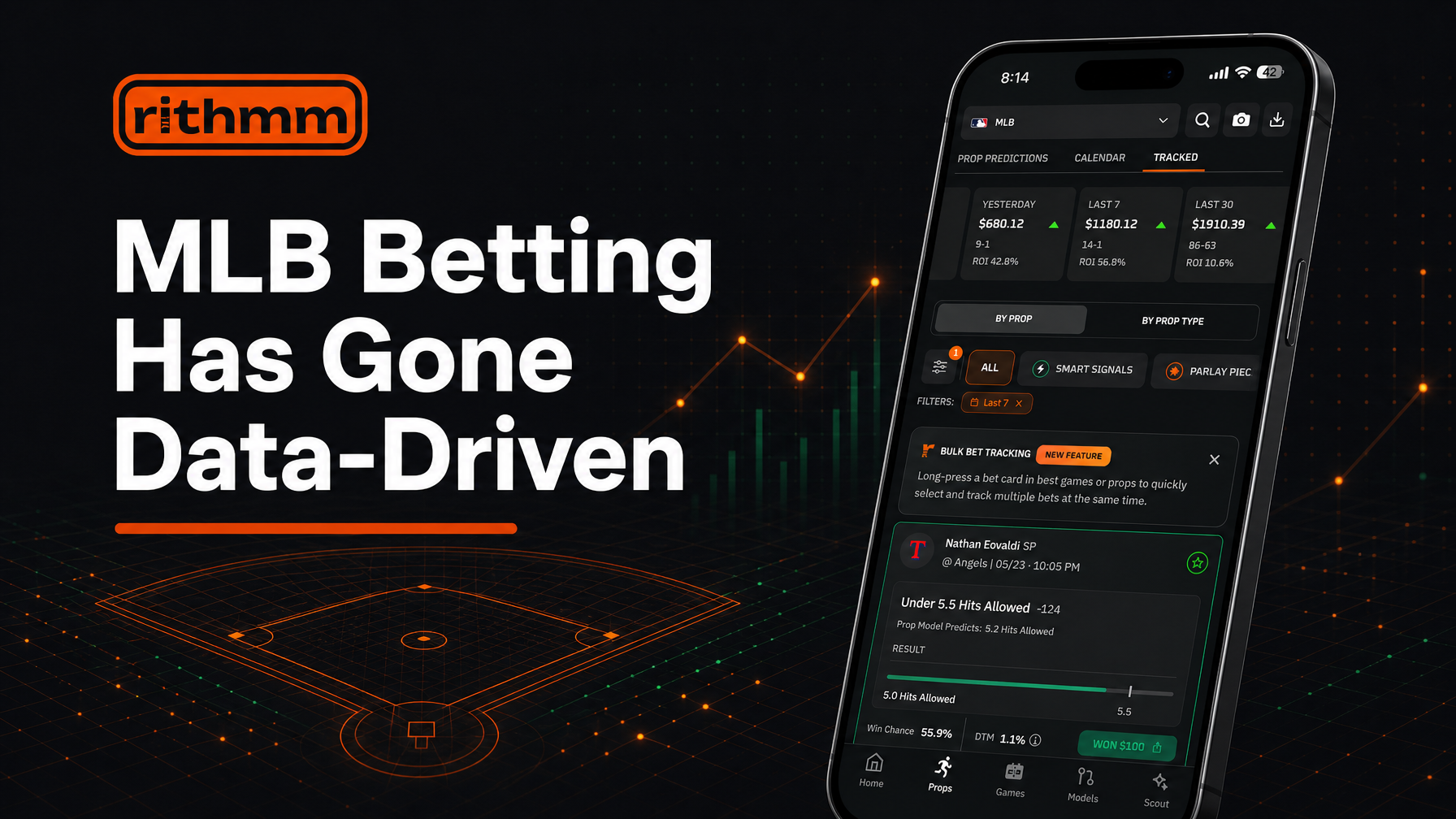
Many MLB bettors are now tracking ROI, win rates, and long-term performance across prop categories instead of focusing only on single-day results. Tracking over time is what separates a disciplined process from a lucky streak.
Inside Rithmm, bettors can track MLB props, monitor performance, compare predictions against sportsbook lines, and identify Smart Signals backed by historical pattern data. The idea is straightforward: a better process leads to better long-term decisions.
MLB Betting Is Becoming More Sophisticated
The modern MLB bettor is evolving. More users are looking for smarter workflows, predictive insights, personalized modeling, and AI-assisted research, rather than blindly tailing picks online.
That doesn't mean predictive models guarantee wins. Nothing in sports betting does. But many bettors now believe having a data-backed process is significantly better than betting blind.
Final Thoughts
MLB betting has become increasingly competitive. Sportsbooks move fast, markets are sharper, and information spreads instantly.
That's why more bettors are turning toward predictive modeling platforms like Rithmm for help navigating MLB props and game predictions throughout the season. For bettors looking to make more informed decisions, predictive analytics are becoming less of a luxury and more of a standard part of the process.