

AI Sports Picks vs. Capper Picks: What the Data Shows
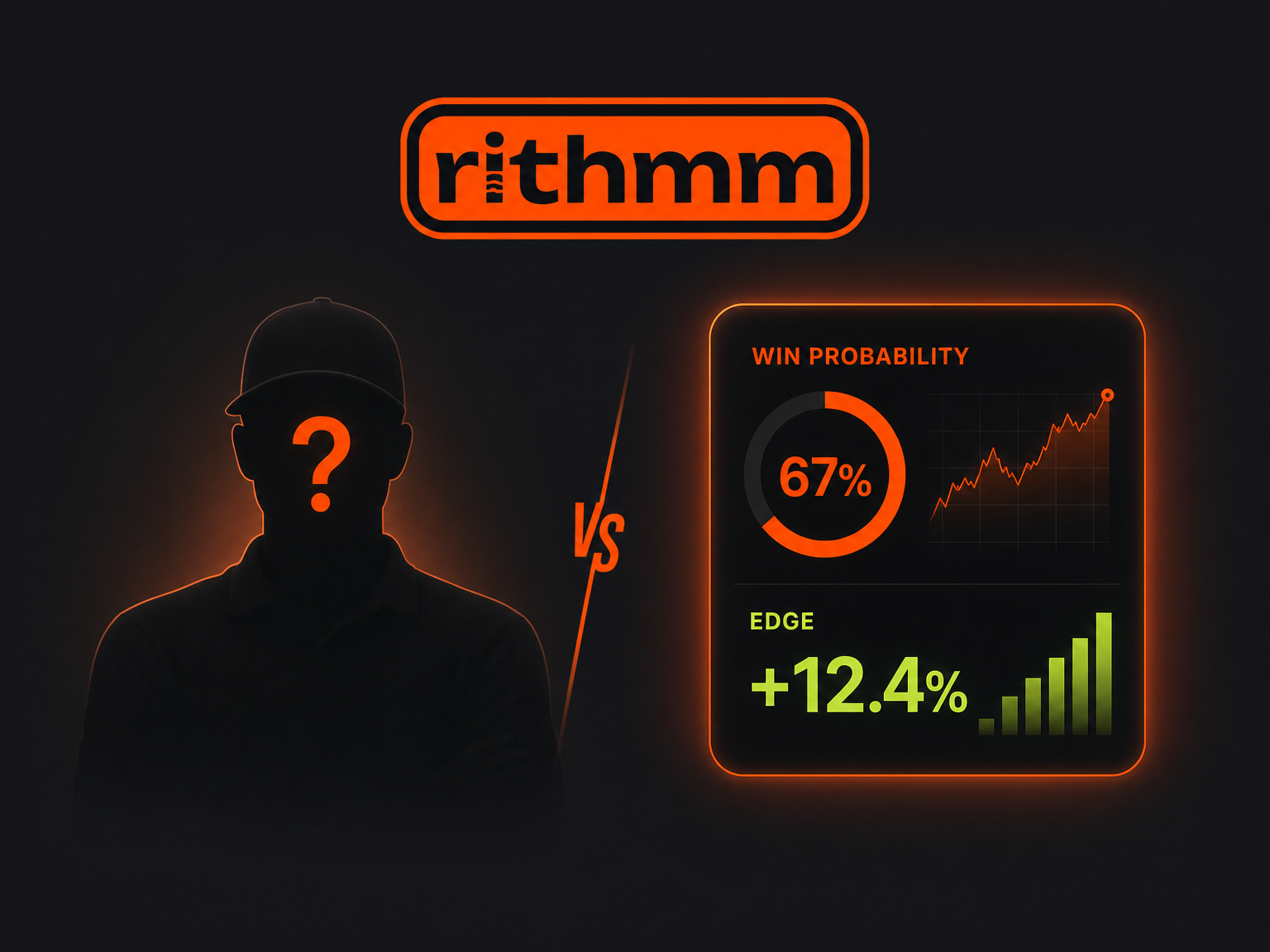
AI sports picks and capper picks are not two flavors of the same product. A capper publishes opinions shaped by experience, narrative, and a finite daily shortlist. AI sports picks come from models that project outcomes, compare those projections to the sportsbook line, and surface Edge when the gap is meaningful. Over small samples either side can look brilliant. Over large samples, consistency and transparency decide who you can actually audit.
Every sports bettor eventually asks the same question. Should I follow a capper who has been calling games for years, or trust models that never “watched” a game but processed millions of situations? The answer matters because over the long run it is the difference between a repeatable process and a slow bleed dressed up as confidence.
This piece separates the two approaches, explains why systems often beat humans at scale, and shows what real model Edge looks like when the sample is large enough to trust. For category basics, read AI Sports Betting: What It Actually Does. For cost versus weekly pick passes, see Is Rithmm Worth It?.
The two approaches are not variations of the same thing
The temptation is to think of AI picks and capper picks as different packaging on the same deliverable. Both give you a play. Both come with confidence language. Both promise help against the sportsbook. The underlying process is completely different, and that difference is the whole conversation.
A capper watches games, studies matchups, digests injury news, and forms opinions. Those opinions get filtered through experience, biases, mood, recent results, and confidence. On any given day, a capper puts out a handful of picks based on what they saw and what they think will happen. That is a human process with everything that entails.
An AI model does not watch games. It ingests data across matchups, players, situations, and historical baselines. It converts that data into probability estimates and compares those estimates to the sportsbook’s line. It has no opinion and no mood. It has a probability distribution and a market comparison. That is a different foundation.
Neither approach is automatically “better” on a single night. They behave differently at scale, and understanding why is the point.
Why humans lose to systems over time
The biggest structural disadvantage a capper has against models is not knowledge. It is consistency. Recent results shape confidence and stake size. Emotional memory overweight a vivid play. Fatigue thins research late in a season. Confirmation bias steers which stats get airtime. None of that is a moral failure. It is how human cognition works.
Models treat every game with the same process. They do not remember last week’s heater. They do not skip a research step because Sunday got long. They process the data, produce a probability estimate, compare it to the line, and output a view you can evaluate. Over a small sample, a good capper can beat an average model week. Over a large sample, consistency compounds.
What a real AI Edge looks like at sample size
Talking about AI advantages in the abstract is easy. Showing what one looks like in practice is harder. Here is what real model work produces when you let it run at sample size.
Rithmm’s models track pitcher walks as one of their stronger prop markets. On pitcher walks over bets specifically, the models have hit at a 59.6% win rate across 225 bets this season. That is a 134-91 record, a 6.79% ROI, and meaningful profit in standard unit sizing.
Two things about a number like that matter. First, 225 bets is a real sample. It is not last week. It is hundreds of independent decisions. Small samples lie. Second, a mid-single-digit ROI at that sample size is how serious bettors actually build long-term results. It is not glamorous. It is arithmetic.
The reason models can sustain that kind of Edge is the same reason humans struggle. The models do not have a bad week in the psychological sense. They do not chase losses. They run the same analysis on the 226th bet that they ran on the first.
Why cappers can look better in the short term
None of this means cappers cannot win. Some do, and some win big for stretches. Structural reasons still make short-term capper records look cleaner than the full math supports.
Cappers pick their spots. A three-pick day can be the three highest-conviction swings on the board. Models that evaluate every matchup include games a capper would never publish. Cappers can also present curated public records. Honest complete records often land near coin-flip hit rates with thin ROI, which is less marketable than a highlight reel. Selection bias in who gets famous does the rest. The cappers you hear about had a loud heater. The ones who went cold and quit are invisible.
None of that is disqualifying. Good cappers exist. When you compare pick services to AI models, you are often comparing a curated reel to a more complete process log.
What makes AI sports picks legitimately different
Volume of data. Consistency of analysis. Transparent methodology when the product shows model probability, market line, and Edge on every play. Speed at scale when lineups and news break. Backtestable performance you can evaluate without asking for permission. Those are structural features no human process fully replicates.
A legitimate AI prediction tool will show the work. A capper’s methodology lives in their head. You cannot fully audit it.
What real AI picks require
The AI advantage is real, but it does not come free. Serious models require data infrastructure and ongoing development. That is why many free AI picks sites stay thin. Real modeling at scale costs money to run.
Rithmm is a paid subscription with Core at $19.99 per month billed annually or $29.99 month to month, and Premium for deeper model building. The models run across eight sports: NFL, NBA, WNBA, MLB, PGA golf, World Cup soccer, college football, and NCAA men’s basketball. Every projection can include probability context, market comparison, and Edge on the plays that clear the bar. The product is available on web, iOS, and Android.
The 7-day free trial starts when you do. Open Rithmm against tonight’s slate and see what the difference between AI picks and capper picks looks like when you can see under the hood. If the models work for your process, keep the subscription. If they do not, cancel.
That is the honest comparison. AI picks and capper picks are two products on two foundations. Over the long run, systems that stay consistent tend to beat processes that cannot. That is not a knock on cappers. It is arithmetic.
Past performance does not guarantee future results. Rithmm provides data-driven predictions for entertainment and informational purposes.